

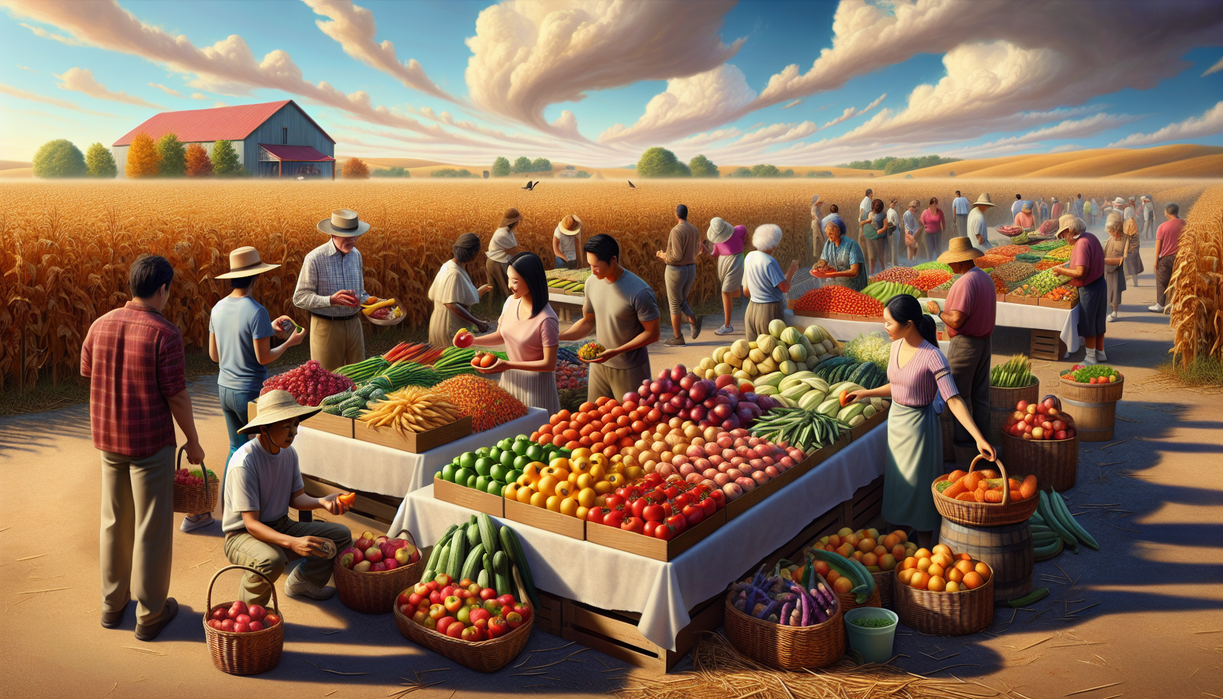
Local Food Hubs Power Illinois’ Heartland
www.insiteatlanta.com – Local food has moved from weekend novelty to everyday necessity across Illinois. Farmers, advocates, and small-town leaders now see local food as both heritage and economic engine. New grants for local food hubs are turning that vision into practical infrastructure, helping connect small farms with schools, groceries, restaurants, and households that crave fresher choices.
These investments do more than move carrots and corn. They rebuild trust between rural producers and nearby communities, create fairer markets for family farms, and keep more dollars close to home. Exploring Illinois’ evolving local food landscape reveals how targeted support for food hubs can reshape what ends up on our plates, while also strengthening the social fabric of the state’s diverse heartland.
Grants Fuel a New Era for Local Food Hubs
Across Illinois, new funding for local food hubs has arrived at a pivotal moment. Many small and mid‑sized farms struggled through supply chain chaos, yet saw rising demand for local food from consumers tired of empty shelves and flavorless imports. Grants now help build storage, aggregation, and distribution capacity, so a network of farms can serve larger buyers without giving up independence.
These hubs act as shared infrastructure for local food. A single farmer rarely has the scale to supply hospitals or school districts. A hub solves that problem by pooling harvests from multiple farms, standardizing quality, and coordinating delivery. Grants cover critical early costs: refrigerated trucks, cold storage, software for orders, even training for staff who manage complex logistics.
From my perspective, public investment in local food hubs functions like rural broadband or roads. It is backbone infrastructure for a resilient food economy. Markets left alone favor low-cost, distant suppliers, because they already enjoy scale and subsidy. Grants help level the field so local food becomes visible, reliable, and competitively priced, not just a niche option at a seasonal market.
How Local Food Hubs Transform Communities
Local food hubs change more than supply chains; they change relationships. When schools purchase lettuce from a nearby cooperative instead of a national distributor, students taste the difference, cafeteria staff know the growers, and farmers hear direct feedback. That loop builds accountability and pride. Food stops feeling anonymous; it carries a story from soil to tray.
Economically, hubs keep money circulating close to where it is earned. A dollar spent on local food at a hub-supported market often passes through several neighborhood hands before leaving the region. Farmers spend on local mechanics, seed suppliers, and childcare. Employees at hubs grab lunch at nearby diners. Over time, this multiplier effect quietly stabilizes towns that once relied only on commodity crops.
Culturally, these hubs protect regional traditions. Illinois holds more than endless cornfields. Heirloom apple orchards, small dairy operations, specialty grain growers, and immigrant-led vegetable farms all contribute to a richer local food culture. When a hub helps them reach customers year-round, it preserves recipes, seed varieties, and farming wisdom that might otherwise fade under pressure from industrial agriculture.
Challenges Behind the Promise of Local Food
For all their promise, local food hubs do not offer an easy fix. Running a hub blends farming knowledge with warehouse management, transportation planning, and sales strategy. Many hubs struggle with thin margins, especially early on. Grant money can build a cooler, yet it cannot guarantee consistent orders or flawless logistics. Without strong planning, a gleaming facility risks becoming an expensive shell.
Another challenge comes from expectations. Consumers often view local food as inherently superior, yet they still demand convenience, low prices, and year‑round availability. Meeting those expectations requires transparent communication about seasonality and costs. Tomatoes grown nearby in July taste incredible; in January, they likely come from far away or a greenhouse with higher energy use. Hubs must educate buyers about these trade‑offs without sounding preachy.
From my vantage point, the biggest tension lies between growth and values. As local food hubs scale up, they can start to resemble the very distributors they hoped to replace. The key difference should remain ownership and governance. When farmers and community members hold real power over decisions, scaling up can expand impact without erasing the soul of the movement.
Illinois’ Farm Diversity: The Real Engine of Local Food
Illinois often gets reduced to a sea of corn and soybeans, yet the state’s local food story goes far deeper. From the fruit belt along the Mississippi to urban farms near Chicago, the range of operations is remarkable. Small grain growers experiment with heritage wheat for artisan bakeries. Vegetable farms serve community-supported agriculture (CSA) members. Pasture‑based livestock producers supply grass‑fed beef and lamb.
This diversity gives local food hubs flexibility. A hub might coordinate a spring surge of asparagus and spinach, then pivot to sweet corn, tomatoes, and melons through summer. Autumn brings squash and storage crops, while winter relies on root vegetables and grain products. With thoughtful planning, hubs can craft multi‑season offerings that keep buyers engaged and farms productive across the calendar.
In my view, diversity also serves as risk management. Weather disasters rarely hit every crop the same way. When a late frost wipes out one orchard’s peaches, nearby growers with other crops can still deliver. That resilience becomes crucial as climate patterns shift. Local food hubs that embrace diversity are not just quaint—they are strategic assets for food security.
From Farm Gate to Fork: Building Trust Through Transparency
Trust sits at the heart of successful local food systems. Consumers want to know who grows their food, how soil is treated, and whether workers receive fair wages. Local food hubs can shine here by sharing clear information about their partner farms. Simple practices—profiles on websites, farm tour days, origin labels on products—help customers see beyond a logo.
Technology supports this transparency without stripping away humanity. Some hubs use QR codes that link to farm stories or quick videos from growers. Others send weekly emails that highlight what arrived from which farm, along with storage tips and recipe ideas. Rather than faceless supply chains, buyers feel connected to a network of real people facing weather, pests, and early mornings.
I believe this transparency yields deeper loyalty than any discount promotion. When shoppers understand why a bunch of kale costs slightly more at a local co‑op, they often accept the price because they recognize the value. They are not just buying calories; they support soil health, rural livelihoods, and regional flavor. That shift from transactional to relational thinking might be the most radical effect of local food.
Policy, Equity, and the Future of Local Food Hubs
Grants for local food hubs do not exist in a vacuum; they reflect policy priorities. When state agencies dedicate funds to local food, they acknowledge that centralized, industrial models leave gaps. Food deserts persist, especially in low‑income urban neighborhoods and remote rural areas. Local food hubs can help fill those gaps, but only if equity sits at the core of their design.
That means more than token outreach. Hubs can partner with food pantries, WIC clinics, and community health centers to make fresh local food accessible to families on tight budgets. Some create tiered pricing or accept nutrition incentives so that local options compete with convenience store fare. Grants can require or reward these equity goals, nudging hubs toward inclusive models instead of premium-only markets.
Looking ahead, I see the strongest local food hubs as hybrid institutions—part business, part public service, part cultural center. They might host cooking classes, youth internships, or farmer training for historically marginalized communities. With the right mix of revenue streams and public support, local food hubs become anchors for healthier, more just food systems across Illinois.
Reflecting on Local Food’s Growing Impact
As Illinois leans into grants for local food hubs, the state stands at a meaningful crossroads. Will these investments produce a short wave of enthusiasm or a lasting shift in how food moves from field to fork? My sense is optimistic, provided communities stay involved, farmers retain a strong voice, and policymakers view local food not as a trend but as infrastructure. Local food hubs alone cannot solve every challenge, yet they can knit together farms, schools, hospitals, and households into a more grounded, resilient network. If we keep asking where our food comes from—and who benefits when we buy it—local food will continue to grow from slogan to lived reality across the heartland.