
How Content Context Shapes Chick-fil-A’s New Bite
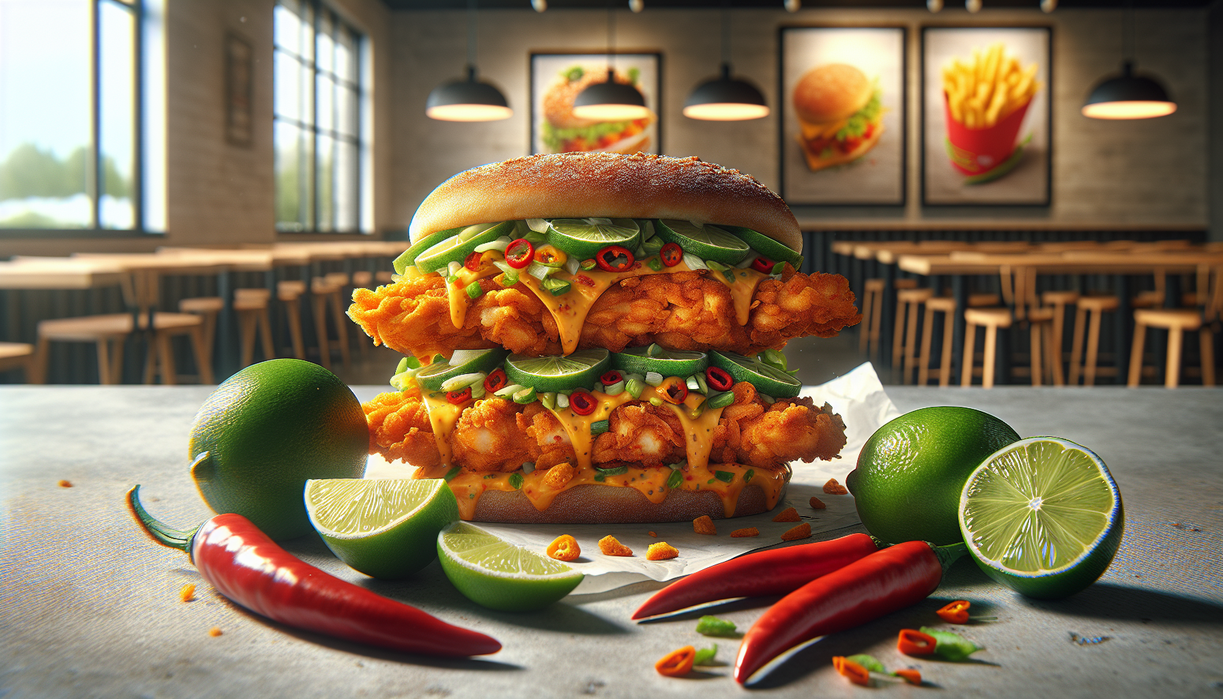
www.insiteatlanta.com – The fast-food world is quietly shifting, and content context is now influencing what ends up on your tray as much as any secret recipe. Chick-fil-A’s latest experiment, a Sweet Chili Lime Crunch Sandwich available in select Triad locations through March 7, shows how brands read cultural cues, social feeds, and local habits before rolling out new flavors. This limited-time item pairs crispy chicken with a cabbage slaw and lime-forward dressing, tapping into a broader appetite for fresh, global-inspired twists on familiar comfort food.
Seen through the lens of content context, this sandwich is more than a one-off menu item. It is a live test of how customers react to texture, color, and flavor combinations they already consume with their eyes across TikTok, Instagram, and food blogs. By launching it in specific markets instead of nationwide, Chick-fil-A can study how the local scene, regional taste preferences, and online buzz interact, then decide what deserves a permanent spot on the menu.
Reading Content Context Through Flavor Experiments
Content context starts with understanding what people crave beyond simple hunger. The Sweet Chili Lime Crunch Sandwich reflects an audience shaped by social media trends, recipe videos, and travel-inspired street food content. Cravings come from more than taste buds now; they emerge from timelines, algorithm-driven feeds, and conversations about “crunchy,” “zesty,” and “fresh” experiences. Chick-fil-A appears to be tuning in to that noise and translating it into a product that looks good both on camera and on the palate.
Consider the ingredients: a crunchy chicken filet, cabbage slaw, and a lime-accented dressing with a sweet chili kick. Each element responds to content context. Cabbage slaw gives visual height, color contrast, and an audible crunch, perfect for close-up sandwich shots. Lime dressing adds brightness that keyword-rich menu descriptions can highlight. Sweet chili flavor taps into a global fusion narrative, where Southeast Asian-style sauces meet familiar American fast food, making every bite feel modern but still accessible.
Limiting this test run to specific Triad locations is itself a content context strategy. By choosing a defined region, Chick-fil-A can observe how local feedback, online reviews, and user-generated posts interact with national brand identity. Are guests sharing photos? Are food influencers in the area hyping it up or shrugging? Do regional palates welcome the heat and tang or prefer milder profiles? These signals, mixed with sales numbers, create a data story that guides future menu moves.
Why Content Context Matters More Than Ever
Modern marketing used to focus on catchy slogans and glossy ads; now the emphasis has shifted to how a product fits into content context across multiple channels. A sandwich must perform well not only at the drive-thru window but also on short-form video, delivery app thumbnails, and local news coverage. Chick-fil-A’s test sandwich illustrates this shift. Its texture and color are designed for scroll-stopping content, while the flavor concept rides current enthusiasm for sweet-heat combinations and bright citrus.
From my perspective, ignoring content context would be a risky move for any major chain. Consumers no longer discover food only through traditional advertising or word of mouth. They encounter it while doomscrolling at night, watching creators compare crispy sandwiches, or following local food bloggers who rate limited-time offers. When Chick-fil-A drops a Sweet Chili Lime Crunch Sandwich into the Triad, it is not just feeding a city; it is also feeding a network of opinions, reactions, and comparisons that might influence future guests far away.
This approach also highlights a subtle shift in power. Guests shape menu development through their behavior in real time. If photos of this sandwich trend, if reviews rave about the cabbage crunch and lime dressing balance, then that feedback loop encourages more experiments in the same direction. If reaction remains lukewarm, the concept may be shelved, reworked, or saved for a different region. Content context becomes an always-on focus group, guiding flavor innovation without a traditional survey in sight.
From Test Sandwich to Future Menu
Looking ahead, the Sweet Chili Lime Crunch Sandwich signals where fast food may be heading when content context takes center stage. Expect more region-specific launches, flavor mashups built to photograph beautifully, and seasonal offerings that echo whatever food conversation dominates social media at the moment. My take is that guests who pay attention to these limited-time experiments are getting a preview of tomorrow’s staples. Even if this exact sandwich disappears after March 7, the lessons drawn from Triad customers—their photos, comments, and buying patterns—will echo across future menu boards, proving that every bite we share online helps shape what appears on our plates next. In that way, our feeds and our fries are now firmly intertwined, concluding this chapter with a reminder that convenience food has become a living, evolving dialogue.