
Content Context of Lunar New Year Dumplings
www.insiteatlanta.com – The content context of a single dumpling can stretch across continents, memories, and years of study. At Amazing Dumplings in Squirrel Hill, that context begins in Northwest China, where chef-owner Fengping Geng spent her childhood folding dough, learning flavors, and absorbing traditions that still shape her menu today.
Her restaurant’s focus on dumplings is not a trendy pivot but a lifelong project refined through observation, travel, and relentless practice. Each plate expresses a personal archive of Lunar New Year celebrations, regional Chinese cuisines, and the emotional content context of sharing food with family. To appreciate her cooking, it helps to look beyond the plate and into the story that seasonings, textures, and shapes quietly tell.
From Northwest China to Squirrel Hill
The content context of Geng’s cooking begins at the family table, where dumplings were more ritual than recipe. Lunar New Year meant gatherings that lasted for hours, with relatives chatting while nimble hands folded endless crescents of dough. This rhythm of celebration embedded dumplings as symbols of luck, reunion, and patience, long before they became a restaurant specialty.
Growing up in Northwest China, she saw dumplings not as a single fixed dish but as a flexible form. Fillings shifted with season, budget, and local ingredients. Sometimes they were rich with lamb and aromatics; other times, modest vegetable blends stretched to feed a crowd. This early exposure taught her that content context is everything: a dumpling expresses its environment as much as its maker.
When Geng eventually settled in Pittsburgh’s Squirrel Hill neighborhood, she carried those formative experiences with her. At first, dumplings shared menu space with other homestyle dishes. Over time, customer curiosity and her own drive to perfect technique steadily pushed the restaurant toward a more focused identity. Amazing Dumplings emerged as a place where the past could speak clearly through each bite.
Content Context as a Culinary Language
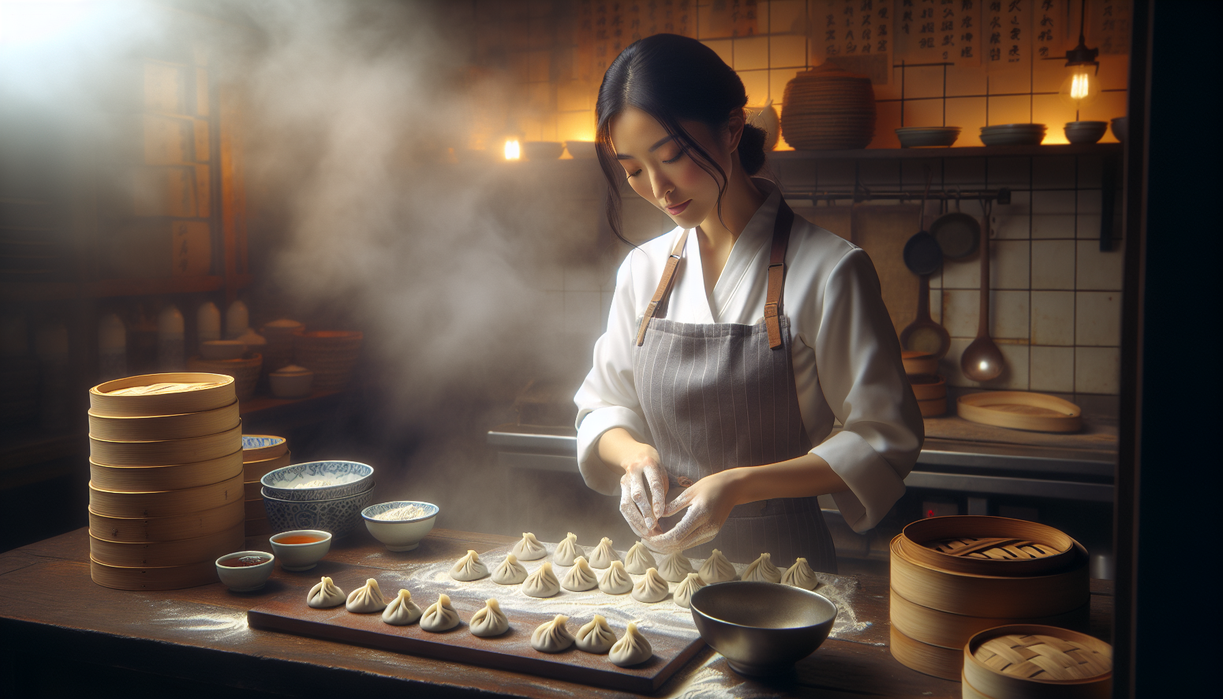
To understand her menu, think of content context as a kind of culinary grammar. The dough thickness, pleat count, and even the way steam clouds the bamboo baskets are not random. They reference specific regions and family habits, built from countless Lunar New Year feasts. Each design choice quietly communicates where the dish comes from and why it matters.
Take the fillings, for example. Pork with chive recalls common northern comfort food, while more nuanced combinations echo Geng’s curiosity about Chinese cuisines beyond her home region. She studied how coastal cities treat seafood, how Sichuan chefs balance heat and fragrance, and how Muslim communities in the northwest elevate lamb. Those lessons appear subtly in her dumplings, forming a layered content context you can taste.
This is where my personal perspective comes in: menus like hers invite us to move past generic labels. Instead of seeing “dumplings” as a single category, we can read them as chapters in an ongoing autobiography. The flavors are not only delicious; they also document migration, adaptation, and resilience. Each order becomes a small act of cross-cultural listening.
At Amazing Dumplings, Lunar New Year is not confined to a date on the calendar. Its spirit lingers in everyday service, turning routine meals into mini-celebrations. The restaurant might not always have the decorations or pageantry of a festival, yet the menu holds the same emotional weight. That is the power of content context: it keeps a holiday alive in ordinary time.
Technique, Study, and the Art of Repetition
Behind every “simple” dumpling lies a serious commitment to craft. Geng’s journey reflects years of experimentation: different flours, precise water temperatures, careful kneading times. She tested how dough behaves when boiled, steamed, or pan-fried, and how each method reveals or conceals certain flavors. The content context of this work is scientific as much as sentimental.
Her study of Chinese cuisines goes beyond home cooking. By observing chefs in other regions, she picked up methods that help her refine texture and aroma. Slow-marinated fillings create depth without heaviness. Smart use of ginger, scallion, and spices allows balance instead of blunt intensity. These technical choices shape how the diner experiences the story that each dumpling tells.
From my viewpoint, repetition is the unsung hero here. Folding hundreds of dumplings daily may look monotonous, yet that repetition is where intuition develops. Fingers begin to sense when dough is too dry or too elastic. Ear and eye detect the subtle hiss that signals a perfect pan-fry crust. Over time, the cook internalizes a vast content context of micro-adjustments, turning routine labor into quiet artistry.
There’s also a cultural dimension to this discipline. In many Chinese households, Lunar New Year dumpling-making is communal work. Children learn technique at the table, guided by elders who correct pleats and seal edges with practiced certainty. Amazing Dumplings mirrors that environment, just in a commercial setting. Every employee who participates becomes part of this chain of knowledge.
Eating Dumplings as an Act of Understanding
When you sit down to eat at Amazing Dumplings, you enter the content context that shaped the restaurant: Northwest Chinese family traditions, cross-regional study, and the emotional gravity of Lunar New Year reunions. My advice as both observer and eater is to slow down. Notice how the wrapper texture shifts from edge to center, how the filling balances richness with freshness, how sharing plates with friends alters the experience. In doing so, you are not just consuming calories; you are acknowledging the journeys—geographical, cultural, and personal—that converge on your table. That awareness might be the most satisfying flavor of all, and it lingers long after the last dumpling is gone.