

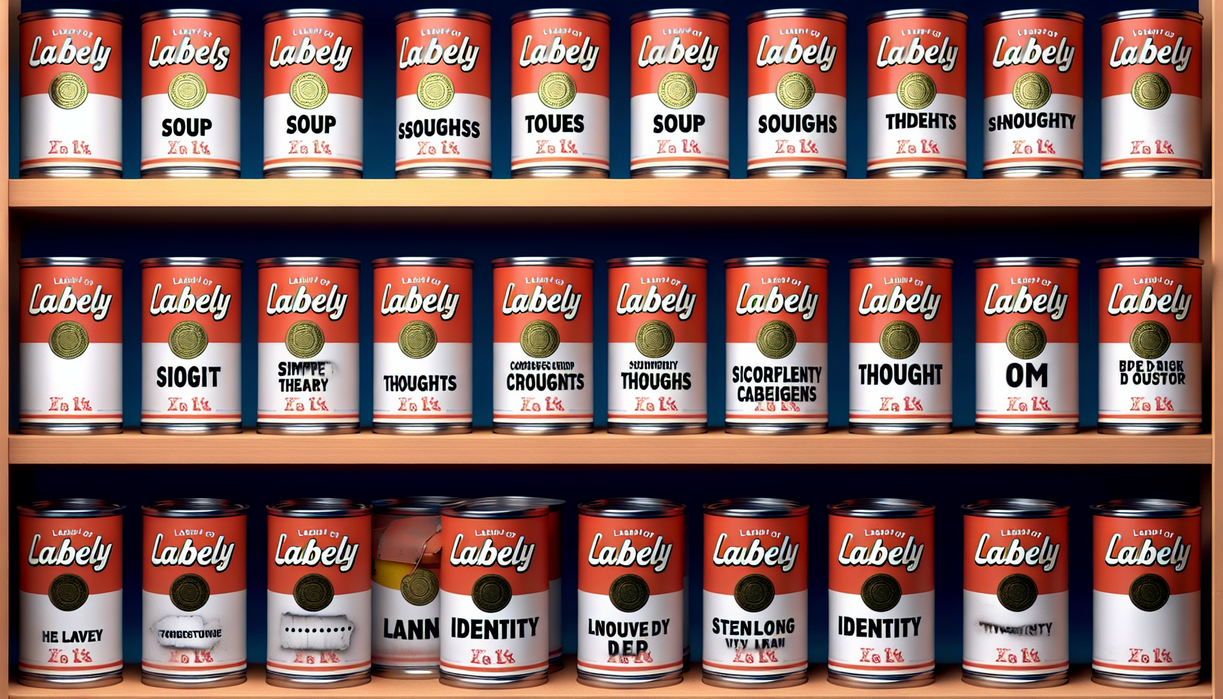
How Context Rescues Us From Empty Labels
www.insiteatlanta.com – Context shapes every conversation, yet we often act as if a label tells the whole story. We tag people as liberal or conservative, traditional or progressive, hero or villain, then stop asking questions. When context disappears, curiosity dies, and so does genuine understanding.
Pastor and writer David Hegg warns that careless labeling can reveal intellectual laziness. He is right. When we skip context, we trade patient thinking for quick judgment. This habit harms public debate, weakens personal relationships, and even distorts spiritual reflection. To grow wiser, we must recover context as our main tool for seeing people, ideas, and events more truthfully.
Why Context Matters More Than Labels
Context supplies the story behind a statement, a decision, or a disagreement. Without context, a sentence on social media can look outrageous, even hateful, when it was a clumsy joke among friends. With context, the same sentence appears as an awkward attempt at humor, not a manifesto of cruelty. Context does not excuse sin or error, but it reveals what actually happened.
Labels, by contrast, compress complexity into a single word. We use them because they feel efficient. Call someone a “fundamentalist” or a “socialist” and we think we understand their soul. Yet people seldom fit neatly inside these tight boxes. Their experiences, motives, doubts, and hopes come from a long story that only context can illuminate.
In my view, our culture has become addicted to fast judgment rather than slow comprehension. We scroll headlines instead of reading articles, skim comments instead of asking questions. When context drops out, nuance disappears. That creates an environment where volume beats reason, and certainty arrives long before wisdom.
How Lazy Labeling Distorts Reality
Labels by themselves are not evil. Problems arise when we use them as substitutes for context instead of pointers toward deeper inquiry. Calling a neighbor “conservative” might describe voting patterns. Treating that label as their entire identity becomes a lazy shortcut. We no longer need to listen; we think we already know.
This habit damages relationships because it reduces people to caricatures. A coworker who questions a new policy gets dismissed as a troublemaker, not a thoughtful critic with valid concerns. A teenager who doubts their upbringing gets tagged as rebellious, not a maturing person searching for conviction. Once a label sticks, context struggles to break through our assumptions.
Public discourse suffers too. Media outlets often rely on simplistic tags to trigger reactions. Nuanced context would slow outrage and require careful thinking, which may not attract quick clicks. As a result, audiences get a diet of fragments, shorn of context, served with heavy seasoning of labels. Many begin to see opponents as enemies rather than complicated human beings.
Recovering Context as a Daily Discipline
Reclaiming context starts with humble habits anyone can practice. Before judging a statement, ask, “What came before this? What pressures or fears might exist here?” When someone receives a label in your presence, gently request more information: “Can you tell me the story behind that?” In conversation, aim to know context at least as well as you know categories. Personally, I have found that when I slow down to gather context, my certainty softens, compassion grows, and my conclusions become more accurate. Labels may still assist as tools, yet they no longer rule the process. Context regains its rightful place as the frame that keeps truth from collapsing into oversimplified slogans.