
KPop Demon Hunters Meal and the Ice Cream Plot
www.insiteatlanta.com – When a fast-food giant leans into pop culture, the magic lives in the content context more than the calories. The KPop Demon Hunters Meal from McDonald’s is the latest example, mixing fandom, food, and a wild new ice cream twist into one strange, fascinating package.
This collaboration is not just about nuggets and sauce; it’s about how story, music, and visuals reshape an ordinary combo into an event. To really get the full content context of this limited-time meal, you need more than a tray and a receipt—you need a working ice cream machine and a willingness to embrace the weird.
Content context: more than a meal, it’s a narrative
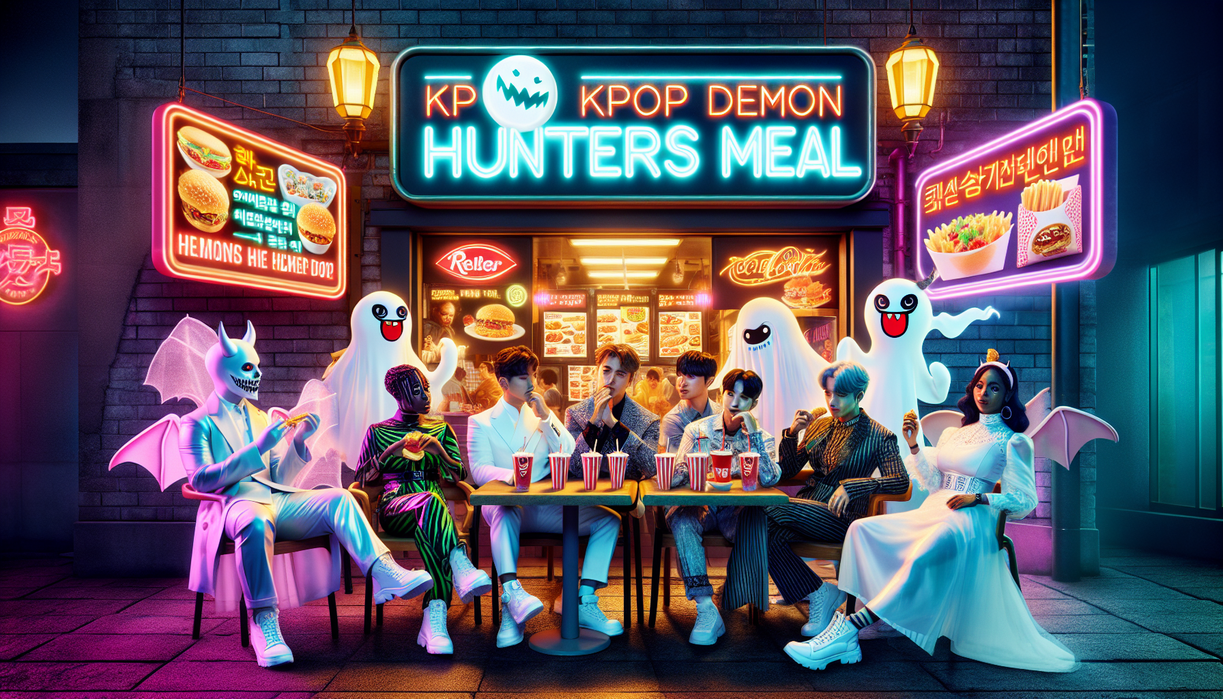
The KPop Demon Hunters Meal turns dinner into a mini media experience, where content context does the heavy lifting. Instead of a simple promo, McDonald’s ties your order to a fictional universe filled with supernatural idols and demon battles. The food becomes a prop, a ticket into that story, which keeps fans talking long after the last fry disappears.
This is clever because it stretches value beyond taste or portion size. You pay for a sandwich, fries, and dessert, yet you also receive lore, characters, and a curated soundtrack. The content context wraps everything in an emotional layer, especially for fans already invested in K-pop culture, anime aesthetics, or fantasy themes.
Even for casual customers, the narrative sparks curiosity. Why demon hunters? Why this sauce color? Why ice cream with such an odd topping? Every question nudges people toward the campaign’s videos, socials, and tie-in content. The meal becomes both gateway and anchor, feeding algorithms as efficiently as stomachs.
Ice cream chaos: crazy toppings, broken machines
The strangest part of this promotion sits right on top of the dessert. McDonald’s is testing a new kind of ice cream add-on crafted to match the KPop Demon Hunters vibe. Think crunchy, slightly eerie mix-ins, vivid colors, or even spicy-sweet dust that feels like it came from an alchemist’s lab. It is designed so the dessert itself carries content context, visually echoing the demon-hunting narrative.
Here is the catch: you only get this experience if your local ice cream machine is working. That running joke about McDonald’s soft-serve machines being perennially out of order suddenly matters more than ever. When the hero dessert is MIA, the content context collapses, because a core piece of the story—this bizarre, on-theme ice cream—never reaches your tray.
From my perspective, that tension between ambitious concept and fragile execution is oddly on-brand for modern marketing. Brands chase elaborate, content-heavy campaigns while infrastructure still struggles with basic reliability. It is amusing and slightly tragic: an entire demon-hunting narrative blocked by a blinking “machine down” message.
Why content context makes the ice cream essential
The dessert does not merely finish the meal; it completes the plot. Its color, texture, and topping connect directly to the KPop Demon Hunters universe, turning a standard cone into a collectible moment. Without it, you lose a big slice of content context, similar to watching a key episode out of a series. That is why this “crazy” ice cream matters: it stitches together theme, taste, and fandom into one final bite, proving that dessert can carry as much narrative weight as any music video or character reveal.
From combo deal to cross-media experience
This campaign shows how far fast-food promotions have shifted from simple discounts to full-blown cross-media experiences. The KPop Demon Hunters Meal operates almost like a multiplayer game, with each element contributing to the content context. Menu items reference characters or powers, packaging hides visual easter eggs, and mobile apps unlock exclusive clips or tracks tied to the fictional group.
For fans, this multi-layered approach turns a visit to McDonald’s into an interactive ritual. They snap photos of the special packaging, sync playlists from the campaign, and hunt for secret codes printed under lids. The food becomes proof of participation, a physical trace of an online event that spills into real life. Every bite is documented, shared, and folded back into fandom discourse.
From a marketing standpoint, the brilliance lies in how this structure encourages repeat visits. If a certain sticker, card, or digital badge only appears with the drink or dessert, customers feel pressured to return. Content context becomes a subtle engine of loyalty. You are not just collecting calories; you are collecting chapters of a story, artifacts from a temporary universe.
The K-pop factor: fandom as fuel
K-pop partnerships thrive because they understand how fandom treats context as currency. A meal linked to a fictional idol group does not live in isolation; it taps into fan fiction, fan art, reaction videos, and elaborate theory threads. The KPop Demon Hunters collaboration adds another layer by mixing K-pop glamour with supernatural lore, giving creators even more to explore.
Content context powers that creativity. Fans do not simply show their tray; they stage photos that match character aesthetics, using colored lighting or cosplay. They review the ice cream topping as if it were an in-world potion, crafting narratives where each menu item has lore significance. The meal becomes source material, not just merchandise.
Personally, I see this as a glimpse of where branded content is heading. Instead of one-sided ads, we get open-ended story sandboxes. Companies provide a skeleton narrative, then let fans flesh it out on TikTok, Instagram, or YouTube. Value emerges from how richly audiences expand the content context, not from the original script alone.
Where the ice cream fits in the fandom ecosystem
Because the dessert looks so distinctive, it naturally becomes a centerpiece of fan content. Short clips of the ice cream melting, close-ups of the topping texture, or “first taste” reactions slide easily into social feeds. Each post reinforces the campaign’s aesthetic and lore. In essence, the ice cream serves as a visual anchor for user-generated creativity, grounding wild fan stories in one tangible, photogenic prop.
Critique, hype, and the future of edible storytelling
No campaign is perfect, and this one invites valid critiques. Some might say the KPop Demon Hunters Meal leans heavily on spectacle while the food itself remains standard fare. Nugget boxes with special art and a flashy ice cream topping do not change the nutrition math. For skeptics, the content context feels like a colorful distraction from an otherwise ordinary fast-food experience.
However, ignoring the narrative would miss what modern consumers actually buy. Many people are paying not solely for sustenance but for small, shareable stories to brighten their feeds. From that angle, this meal does its job. It offers a plot, characters, visuals, and a distinct dessert that stands out in photos. The real product is the experience, with the food as hardware supporting the software of story.
From my perspective, the most interesting question is sustainability. Can brands continue raising the bar on content context without burning out audiences or staff? Each new limited-time offering tries to outdo the last with deeper lore, bolder visuals, and more complex crossovers. At some point, fatigue may set in, or practical issues—like perpetually broken ice cream machines—will undermine even the most creative ideas.
Personal take: excitement meets exhaustion
As someone who loves both food media and pop culture, I find this campaign thrilling on paper. The blend of K-pop aesthetics, supernatural themes, and “crazy” ice cream toppings scratches a very particular itch. It treats fast food as a storytelling medium, not just a commodity. The content context invites analysis, memes, and debates about whether the dessert actually fits the demon-hunting motif.
At the same time, I feel a touch of exhaustion. Every bite of branded food now arrives with lore, hashtags, cinematic trailers, and collectible packaging. The KPop Demon Hunters Meal pushes this to an extreme. If your experience relies on a very specific dessert plus a functioning soft-serve machine, the whole thing starts to feel fragile, even over-engineered. A basic milkshake suddenly carries narrative responsibility.
Yet maybe that fragility makes it special. When everything depends on a machine notorious for breaking, the campaign gains unintended drama. Will you actually get the ice cream that completes the story? Or will you be left with a lore-shaped hole on your tray? That uncertainty becomes part of the content context, transforming a logistics problem into a quirky subplot fans can laugh about.
Edible stories as the next media frontier
Looking ahead, I expect more collaborations where food doubles as narrative device, much like this one. The KPop Demon Hunters Meal illustrates how a combo can behave like a limited series: released for a short run, expanded through spin-off clips, then retired to make space for the next crossover. Content context binds each piece together, from the first teaser poster to the last melted scoop. Whether you find that trend exciting or exhausting, it is hard to deny that the humble fast-food dessert now plays a starring role in how stories taste, feel, and spread.
Conclusion: when dessert completes the story
Strip away the posters and playlists, and the KPop Demon Hunters Meal is just another fast-food bundle. Yet inject a strong content context—characters, lore, aesthetics—and it shifts into something stranger and more memorable. The ice cream, topped with its theatrically odd garnish, becomes not an optional extra but the narrative finale. Miss it, and the story feels incomplete.
That tension between idea and reality defines this promotion. The creative team imagines a seamless experience; the real world offers broken machines, sold-out sauces, and rushed staff. Somewhere between concept art and your actual tray, the myth collides with the mundane. When it works, you get a rare fusion of snack and story. When it fails, you get fries with a side of disappointment.
Reflecting on it all, I think the campaign’s real legacy lies in how it reframes expectations. People will increasingly judge branded meals not only by flavor but by narrative coherence. Does the dessert match the plot? Do visuals, music, and packaging tell a unified story? For better or worse, content context has become a key ingredient. The next time you approach a counter and consider a limited-edition meal, you will not just be asking, “Is this tasty?” You will also be wondering, “Is this chapter worth adding to my personal story?”