
Pie Wars: When Love Tastes Like Competition
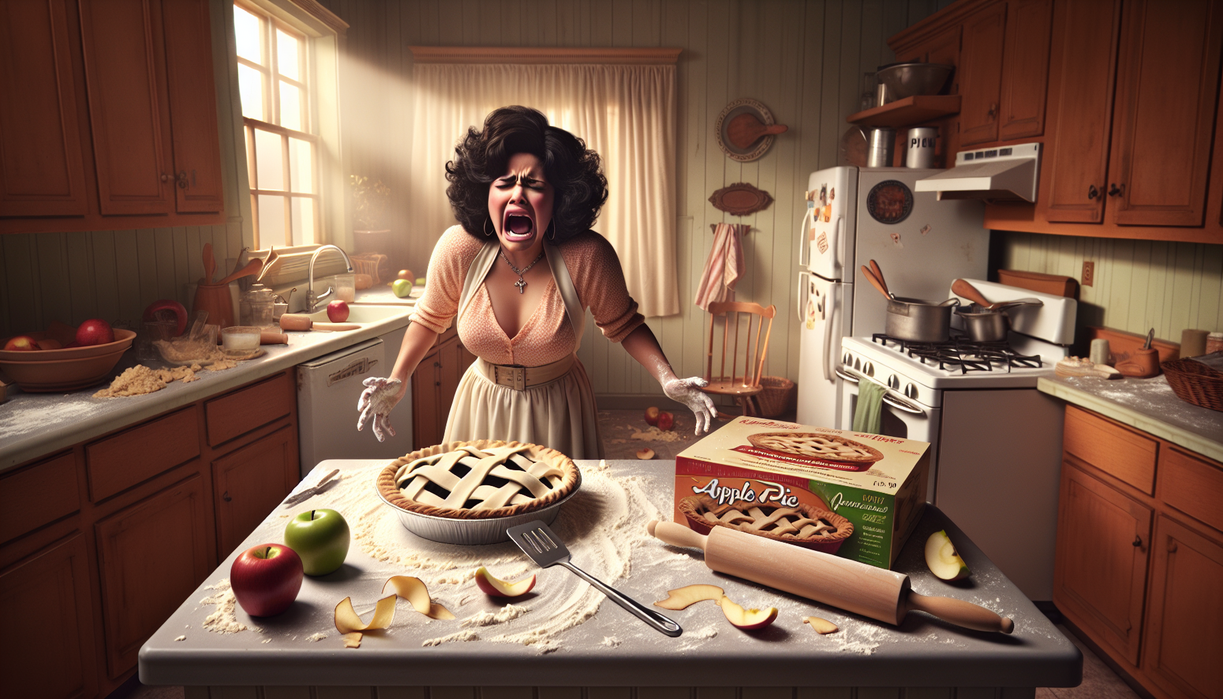
www.insiteatlanta.com – My latest apple pie disaster ended with a smoking oven, a sticky floor, and me declaring a truce with pastry altogether. I told David, my partner in life but rival in dessert expectations, that I am officially retiring from homemade pie. The frozen pie aisle can have him now, with its perfectly crimped crusts and smug, uniform slices.
That meltdown was not just about a burnt pie. It was about years of quiet comparison: his ex’s legendary holiday pie, his mom’s flawless lattice crust, my own desperate attempts to measure up. Somewhere between peeling apples and scrubbing caramelized sugar off the pan, I realized this was not just baking. It had turned into a competition I never agreed to join.
How Pie Turned Into an Emotional Scoreboard
The first time I baked pie for David, I wanted it to taste like comfort. Flaky crust, warm cinnamon, soft apples. Instead, it tasted like pressure. He mentioned, casually, that his ex made an incredible pie every Thanksgiving. Then, another time, he said his mom’s pie always came out perfect, no recipe needed. Each harmless comment planted a seed of insecurity in my already fragile pie confidence.
Pie became a silent test I kept failing. If the crust shrank, I imagined his mother’s crust never did. When the filling spilled over, I pictured his ex plating immaculate slices. Every tiny flaw in my pie felt like proof I could not compete with the women who came before me. Even when David insisted he loved my efforts, my brain translated his praise into polite consolation.
Eventually, I realized I was not tasting apples and butter anymore. I was tasting resentment. Every time I rolled out dough, I rolled out memories of old girlfriends, childhood stories, and my own fear of not being enough. The pie on the counter became a scoreboard in my mind, tallying up wins for other women and losses for me. No wonder the crust kept cracking.
Frozen Pie, Ego Bruises, and Hidden Expectations
After my latest chaotic pie incident, David suggested, with good intentions, that maybe we could try a frozen pie next time. Rationally, that made sense. Frozen pies are reliable, convenient, and usually decent. Emotionally, it stung. It felt like an admission that I could not master something his ex or his mom apparently nailed without effort. The pie was no longer dessert. It was an identity crisis wrapped in pastry.
I started to ask myself why this dessert carried so much weight. No one expects perfection from a weeknight pasta dish, yet pie seemed loaded with meaning. A homemade pie often symbolizes care, tradition, even domestic competence. In my head, failing at pie meant failing at being the kind of partner who glides around the kitchen, effortlessly recreating childhood nostalgia. The frozen pie became a symbol of my supposed shortcomings, not just a shortcut for busy evenings.
But ego has a funny way of distorting reality. David never actually said, “You must bake pie like my mother or my ex.” That script came from me. I projected old insecurities onto a pie tin, convinced that every slice carried a comparison. The more I obsessed over pie, the more I forgot the real point: sharing something sweet together, not proving my worth in a bake-off no one else had signed up for.
Letting Go of the Perfect Pie Myth
Walking away from homemade pie feels both petty and powerful. On one hand, it is just dessert. On the other, it represents a choice to stop measuring myself against ghosts of other women and impossible domestic ideals. I might still buy a frozen pie when the craving hits, but now it will be on my terms, without shame. Maybe one day I will return to homemade pie for fun, not competition. Until then, I am choosing peace over perfection, conversation over comparison, and the kind of love that does not hinge on whose crust comes out best. The sweetest part of this story is not the pie itself, but finally realizing I was never supposed to bake my way into worthiness in the first place.